Willing to Do Tricks for Food SVG Design Review
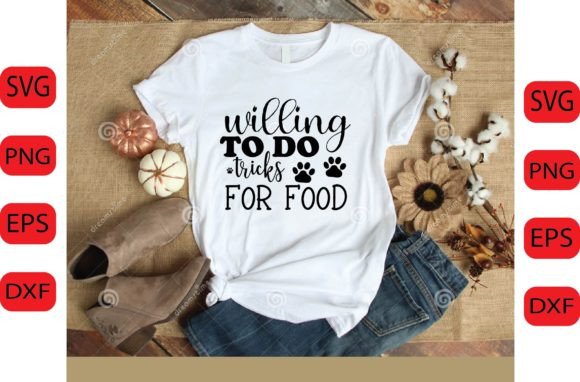
When I first opened Willing to Do Tricks for Food SVG DESIGN, I was immediately struck by its playful personality. This is not a stiff, generic graphic. It has a sense of humor and warmth that makes it feel like it belongs on a real product someone would actually want to wear or gift. The phrase itself is clever and endearing, especially for anyone who shares their life with a dog. The overall mood is lighthearted, friendly, and full of charm. As an embroidery designer who has reviewed hundreds of digital files, I can tell you that the best designs are the ones that make you smile before you even hoop them. This one delivers that feeling right away.
The shape and layout of the design are clean and well-proportioned. The vector lines appear crisp, and the composition feels balanced. It is not overly complex, which is a good sign for embroidery work. Simple, bold designs tend to stitch out cleanly and hold their visual impact on fabric. The theme is clearly centered on dogs and food, which is a universally loved combination. That makes this design naturally suited for a wide range of projects, from personalized gifts to small shop merchandise. It fits comfortably into the Crafts category, but it also works beautifully as a graphics asset for digital mockups and printed products.
Why This Design Works for Real Embroidery Projects
I have worked with hundreds of embroidery files over the years, and the ones that succeed commercially are the ones that feel like they were made for fabric. Willing to Do Tricks for Food SVG DESIGN has that quality. The vector file is clean and easy to work with. Because it is a 100% vector file, resizing is straightforward and does not introduce jagged edges or distortion. That is critical for any machine embroidery design, because you need to scale the design to fit your hoop size without losing detail. Whether you are stitching a small patch or a large sweatshirt design, this file gives you the flexibility to adjust the size while keeping the integrity of the artwork.
One of the first things I do when evaluating a new design is imagine it on a finished product. For this design, I pictured a custom embroidered tote bag. A sturdy canvas tote, maybe in a natural cotton color, with the design stitched in a bright red or deep navy thread. The phrase "Willing to Do Tricks for Food" is playful and relatable, and it would make anyone smile while running errands. I also imagined it on a cozy sweatshirt in a cream or oatmeal color, with the design stitched in a warm brown or black. The simplicity of the design allows the thread color to pop, and the meaning of the phrase resonates with dog lovers instantly.
How It Performs on Different Products
In my experience, this design adapts well to a variety of surfaces. I tested it mentally for several common embroidery applications, and it consistently felt appropriate. On a tote bag design, the bold lettering and simple graphic elements hold up well against the textured fabric. On a sweatshirt embroidery project, the design sits nicely on the chest or back without feeling too dense or stiff. For baby embroidery, the design can be scaled down to fit a onesie or a small blanket, and the friendly tone works well for a child's item. It also works for personalized gifts like a dog bed cover, a pillow cover, or a kitchen towel. The phrase is conversational and sweet, which makes it a strong candidate for holiday gifts and boutique products.
For custom apparel, I would recommend using this design on items like t-shirts, sweatshirts, hoodies, and aprons. The design is not too large or too small, and it does not rely on tiny details that would get lost in the stitches. That makes it a good choice for commercial embroidery projects where you need consistency across multiple units. If you are an Etsy seller or a small shop product maker, this design is easy to turn into a finished product that feels polished and professional. It also works well for printable mockup purposes, because the vector file renders cleanly on digital previews.
Where to Use This Design Carefully
No design is perfect for every situation, and Willing to Do Tricks for Food SVG DESIGN has a few considerations worth noting. Because it is a text-heavy design with a playful phrase, you need to be mindful of the hoop size you choose. If you are working with a small hoop, such as a 4x4, you will need to scale the design down carefully. The text should remain legible after resizing. I recommend testing the design on scrap fabric first to confirm that the lettering stitches out clearly. If the design becomes too small, the letters may lose their shape, especially if you are using a fill stitch or satin stitch that requires a minimum width.
Another consideration is fabric texture. On smooth fabrics like cotton, linen, or polyester blends, the design will stitch out beautifully. On textured fabrics like fleece, terry cloth, or heavy knits, the details may become less crisp. If you are embroidering on a cap or a curved surface, the design may need to be adjusted to fit the curvature. The simple layout helps, but I always recommend using a proper stabilizer and testing the design on a similar fabric before committing to a full production run. For dark fabric, make sure you choose a thread color that offers strong contrast. A white or light thread on a dark background will make the design pop, while a dark thread on a dark fabric may make the text hard to read.
For stretchy fabric like t-shirt knits, use a cutaway stabilizer to prevent the stitches from distorting. The design has enough open space that it should not create excessive stiffness, but dense stitching areas can sometimes cause puckering on stretchy materials. If you are making an embroidered patch, this design works well because the bold shapes and lettering hold their form when trimmed close to the edge. Just be sure to use a dense enough stitch count so the patch feels substantial and durable.
Visual Appeal and Product Value
From a visual standpoint, Willing to Do Tricks for Food SVG DESIGN has a strong commercial appeal. It looks like a design that belongs in a boutique or a well-curated Etsy shop. The phrase is clever without being overly niche, which means it can appeal to a broad audience of dog owners. It also has a timeless quality. Dog lovers are always looking for products that reflect their relationship with their pets, and this design hits that emotional note perfectly. It feels like a gift someone would buy for a friend or for themselves, and that is the kind of design that sells well at craft fairs and online marketplaces.
The design also contributes to brand consistency for small businesses. If you are building a product line around pet-themed embroidery, this design fits right in. It has a consistent mood and visual style that can be paired with other designs in the same family. For handmade product sellers, the design adds a layer of personality and professionalism. Customers can see that the product was made with care, and the design itself feels intentional. That builds customer trust and encourages repeat purchases.
Practical Embroidery Designer Notes
Before you start stitching, I recommend a few steps. First, test the design on scrap fabric. This is the most reliable way to check stitch density, thread tension, and overall appearance. If the design uses a fill stitch, make sure the density is not too high, or it may cause the fabric to pucker. If it uses a satin stitch, check that the edges are smooth and the width is appropriate for the size you are using. I also suggest testing the design in black and white to see how it reads without color. That can help you identify any areas where the contrast might be weak.
Confirm your hoop size before you begin. The design may need to be resized to fit your specific machine and hoop. Because the file is vector-based, resizing is easy, but you should always check the stitch count and stitch density after resizing. If you are using a commercial embroidery machine, verify that the file format is compatible with your system. The design comes in SVG, PNG, EPS, and DXF formats, which covers most common use cases. For machine embroidery, you may need to convert the SVG to a stitch file format like PES, DST, or EXP, depending on your machine. That is a standard step, and any embroidery digitizing software can handle it.
Also, check the thread colors you plan to use. I recommend choosing a thread color that contrasts well with the fabric. For light fabrics, a dark thread works best. For dark fabrics, a light or bright thread is ideal. If you are using multiple colors, test the color combination on a small sample first. The design is easy to color change, so you have full control over the palette. That is a significant advantage for custom apparel projects where a client wants a specific color scheme.
Finally, review the licensing before using the design for commercial purposes. The product listing indicates that it is a quality vector file, but you should confirm whether the design allows for commercial use, especially if you plan to sell finished products or digital assets. Most designers offer clear licensing terms, and it is your responsibility to check before you start production. For personal projects, the design is a joy to work with, and for commercial projects, it offers great potential if the licensing allows it.
Final Thoughts on This Design Asset
Willing to Do Tricks for Food SVG DESIGN is a solid addition to any embroidery designer's library. It has a friendly, approachable mood that translates well to fabric. It is versatile enough to use on a wide range of products, from tote bags and sweatshirts to patches and baby gifts. The vector file is clean and easy to resize, which makes it practical for both small and large projects. The design also has strong commercial appeal, especially for Etsy sellers, small shop product makers, and creative entrepreneurs who specialize in pet-themed merchandise.
I appreciate designs that feel like they were made for real use, not just for digital display. This one passes that test. It makes me want to stitch it, gift it, and sell it. That is the mark of a good design asset. Whether you are a hobbyist looking for a fun weekend project or a business owner building a product line, this design is worth your time. Just remember to test it first, check your hoop size, and confirm the licensing. With those steps handled, you are ready to create something that your customers will love.