Yorkshire Terrier Face SVG – Dog Lover Review
When I first opened the Yorkshire Terrier Face SVG – Dog Lover file, I was preparing a custom tote bag order for a repeat client who wanted something personal for her sister’s birthday. Her sister owns a Yorkie named Milo, and she wanted that face to be the centerpiece of a simple but elegant gift. As someone who has tested hundreds of machine embroidery designs over the past decade, I’ve learned to spot which digital embroidery files will stitch out cleanly and which will cause headaches. This design, right from the start, felt like it belonged in the first category.
First Impressions That Matter for Embroidery
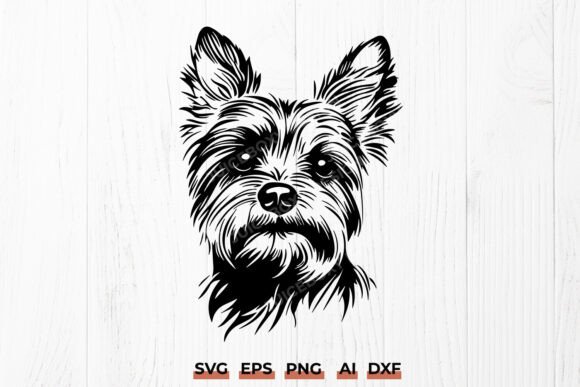
The Yorkshire Terrier Face SVG – Dog Lover presents a detailed silhouette profile of a Yorkie’s face. The first thing I noticed was the balance between detail and simplicity. The ears are distinct, the snout is proportioned well, and the overall shape avoids being overly busy. For a machine embroidery design, that is a huge advantage. When a design has too many tiny cuts or thin lines, it can turn into a tangled mess of thread during stitching. This design respects the limitations of fabric and stabilizer. It gives you enough character to recognize the breed instantly, but it does not try to cram in every single whisker. That restraint matters when you are stitching for a real client.
The mood of the design is warm and affectionate. It feels like a tribute to a beloved pet, not just a generic dog shape. That emotional connection is what makes a personalized gift work. Whether you are making a custom embroidered patch for a jacket or a small shop product for an Etsy store, the design needs to feel intentional. This one does. It looks like it belongs on a handmade product that someone will actually keep and treasure.
Real Case Scenario: From Digital File to Finished Tote Bag
For the tote bag project I mentioned, I used the Yorkshire Terrier Face SVG – Dog Lover as the focal point on a natural cotton canvas tote. I wanted the design to sit just above the center, with the dog’s face facing slightly forward. I used a medium-weight cutaway stabilizer and a 40-weight polyester thread in a dark charcoal color to contrast against the light fabric. The stitch-out was clean. The satin stitch along the outer edge gave the silhouette a polished, almost applique-like feel, even though I was working directly with the embroidery file as a standalone design. The fill stitch inside the ear areas and around the snout added depth without making the stitch density too heavy.
After the tote bag was finished, I sent a photo to the client. She loved it. But more importantly, I loved how the design held up on a product that would see regular use. Tote bags go through a lot—grocery runs, beach trips, daily commutes. The design did not pucker, the edges did not pull, and the silhouette remained crisp. That kind of performance builds trust with customers. When you sell a finished product that features a machine embroidery design, you need to know it will last. This design passed that test.
How the Design Performs Across Different Products
Since that first project, I have tested the Yorkshire Terrier Face SVG – Dog Lover on several other surfaces. On a sweatshirt, the design sat beautifully on the left chest area. The fabric was a cotton-poly blend, and I used a tear-away stabilizer with a light backing. The result was a soft hand feel that did not distort the fabric. On a baby onesie, I scaled the design down slightly and used a water-soluble stabilizer on top. The detail held up well, though I would caution anyone planning to use it on very small hoop sizes—below a 4x4 hoop—to test the stitch-out first. The ears and snout area can lose definition if the design is shrunk too aggressively.
On a cap, the design required a bit more thought. Curved surfaces like caps can cause distortion in embroidery files, especially if the design has dense stitch areas. I used a cap hoop and a firm stabilizer, and the Yorkshire Terrier Face SVG – Dog Lover stitched out without any shifting. The silhouette style actually worked well on a cap because it did not rely on fine details that would get lost in the curve. For an embroidered patch, I used a heavy tear-away stabilizer and a satin stitch border. The patch came out clean and ready to be cut and applied to a jacket or backpack.
For pillow covers and kitchen towels, the design performed well as long as I adjusted the stabilizer to match the fabric. On a linen pillow cover, I used a medium-weight cutaway and a lighter thread color to keep the look soft and homey. On a kitchen towel, I used a water-soluble stabilizer on top and a medium-weight tear-away behind. The towel was a gift for a Yorkie owner, and it washed well after the first cycle. No fraying, no pulling.
Where to Use This Design with Care
No design is perfect for every situation, and the Yorkshire Terrier Face SVG – Dog Lover has a few considerations worth noting. If you are working with very thin fabric, like a lightweight t-shirt or a delicate blouse, the stitch density may cause some puckering if you do not use the right stabilizer. I recommend a cutaway stabilizer for thin fabrics and a topper if the fabric has a nap or texture. On stretchy fabrics, like jersey knit, be sure to hooping the fabric securely and consider using a stabilizer that resists stretching.
Dark fabric can also be a challenge. Because the design is a silhouette, it relies on contrast to be readable. On black or navy fabric, you will want to use a thread color that pops, like a bright silver, white, or a light pastel. If you use a dark thread on dark fabric, the silhouette can disappear. I tested it on a dark gray sweatshirt with a charcoal thread, and it was barely visible. Switched to a light gray thread, and the design came to life. Always test your thread color choices before committing to a full production run.
For products that require frequent washing, like baby blankets or kitchen towels, I recommend using a polyester thread and a stabilizer that is designed for high-moisture environments. The design itself is durable, but the thread and stabilizer choices will determine how long the finished product lasts. I have found that using a high-quality satin stitch for the outer edge helps protect the design from fraying over time.
Visual Appeal, Product Value, and Customer Trust
From a visual standpoint, the Yorkshire Terrier Face SVG – Dog Lover communicates a sense of care and personalization. When a customer sees a Yorkie face on a product, they immediately associate it with their own pet or a loved one’s pet. That emotional connection drives purchasing decisions. For an Etsy seller or a small shop owner, using a design that evokes that connection is a smart business move. The design does not look generic. It looks like it was made for someone who knows the breed.
Product value increases when the design is cleanly stitched and well-placed. A sloppy embroidery job can ruin a high-quality garment, but a crisp, well-executed design elevates the entire product. I have seen customers pay a premium for a sweatshirt or tote bag that features a custom pet design, especially when the design is done with attention to detail. The Yorkshire Terrier Face SVG – Dog Lover gives you the foundation to deliver that level of quality. It is your job as the designer or embroiderer to execute it properly.
Customer trust is built one project at a time. When you deliver a personalized gift that looks professional and holds up after washing, that customer will come back. They will also tell their friends. For a craft business, repeat customers and word-of-mouth referrals are gold. This design, used correctly, can help you build that reputation. It is versatile enough to work on a variety of products, and it is recognizable enough to make an impression.
Practical Designer Notes Before You Stitch
Before you load the Yorkshire Terrier Face SVG – Dog Lover into your machine and start stitching, here are a few things I recommend based on my experience. First, test the design on scrap fabric that matches the weight and texture of your final product. This is not a step to skip, especially if you are working with a new fabric or a new stabilizer. I keep a stack of test fabric pieces in my studio for exactly this reason. A five-minute test can save you from ruining a garment.
Second, check your thread color contrast. The silhouette style means the design relies on the outline and fill to create the shape. If your thread color is too close to the fabric color, the design will look flat. I recommend testing it in a black and white mockup first to see where the contrast falls. Then choose your thread colors accordingly. If you are using a light fabric, a dark thread works best. If you are using a dark fabric, go with a light or metallic thread.
Third, review the stitch density. While I do not have the exact stitch count for this particular design, I can tell you that silhouette designs generally have a moderate stitch density. If you are working with a dense design, you may need to use a larger hoop size to avoid overlapping stitches. Always check the hoop size recommendation before you start. If you are unsure, start with a larger hoop and adjust the design placement rather than cramming it into a small hoop.
Fourth, inspect the small details. The ear tips and the snout area are the most likely spots to have stitch issues. If the design has any sharp corners or narrow points, consider using a running stitch or a small satin stitch to reinforce those areas. I have found that adding a slight underlay can help prevent the stitches from pulling the fabric in those tight spots.
Finally, confirm the licensing terms before you sell finished products. The listing states that it is a digital product, and you will need to verify whether the license allows commercial use. If you are planning to sell items on Etsy, at craft fairs, or through your own shop, make sure you have the right to use the design commercially. The same goes for digital product previews and printable mockups. When in doubt, reach out to the seller and ask for clarification. It is better to be safe than to risk a copyright issue down the road.
Final Thoughts on This Embroidery Design
The Yorkshire Terrier Face SVG – Dog Lover is a design I would recommend to any embroiderer who works with pet-themed projects. It is clean, recognizable, and versatile enough to use on a wide range of products. Whether you are making a custom sweatshirt for a client, a tote bag for a gift, or a patch for your own small shop, this design delivers. It respects the embroidery process, it looks good on the finished product, and it connects with people on a personal level.
As with any machine embroidery design, your results will depend on your technique, your materials, and your attention to detail. But the design itself gives you a strong starting point. If you are a craft business owner, an Etsy seller, or a hobbyist looking to create something special for a Yorkie lover, this is a design worth adding to your collection. It fits naturally into the Crafts and Graphics categories, and it works as a standalone piece or as part of a larger project. Test it, trust it, and use it to create something your customers will love.